

The Process
From Shell to Solution — How Coconut Becomes Carbon
and why the Philippines is one of the best places in the world to source it. Here’s the journey from coconut shell to export-ready activated carbon.
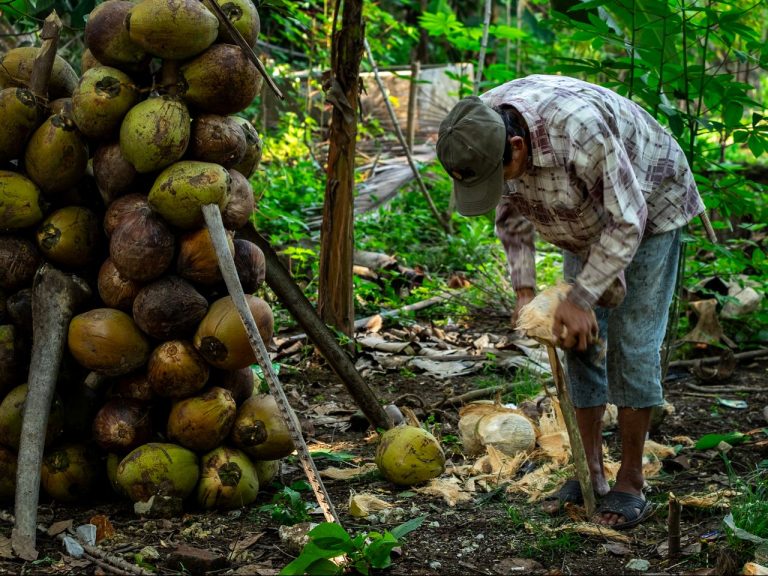
The journey begins in the Philippines, where over 3.5 million coconut farmers produce approximately 14 to 15 billion coconuts each year. The coconut shell — roughly 15–20% of the total fruit weight — is one of the most carbon-dense agricultural byproducts on earth, and one that was, for decades, simply discarded.
By purchasing these shells directly from farming communities, the supply chain converts what was waste into a second income. That’s the link between your industrial order and a Filipino farming household — and it’s what makes our carbon genuinely circular.
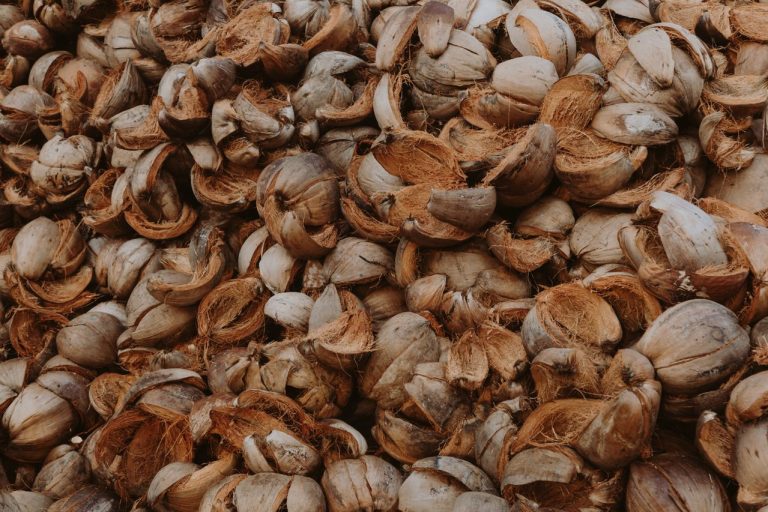
Coconut shells are pyrolyzed at controlled temperatures — typically between 500°C and 800°C — in a low-oxygen environment. This converts the lignocellulosic shell structure into raw char, preserving the coconut shell’s naturally dense, microporous carbon framework.
The result is a pre-carbonized material with pore structure and carbon density already superior to most biomass-derived alternatives — before activation even begins.
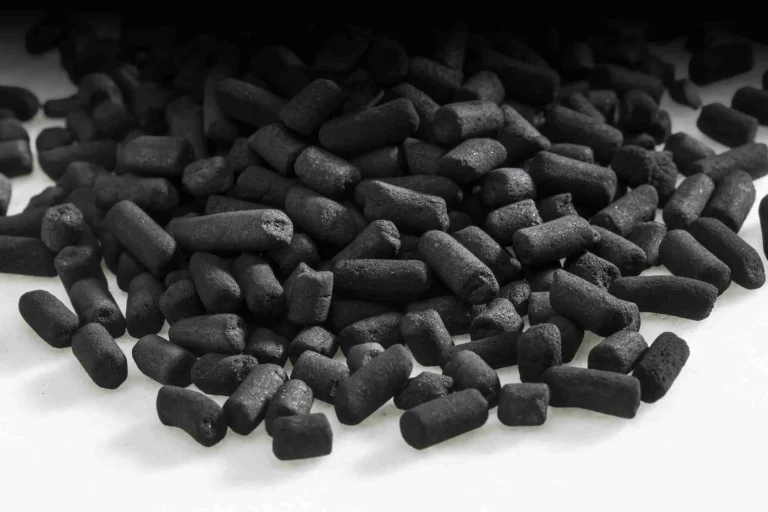
The char undergoes steam activation at temperatures of 800°C–950°C. Steam reacts with and selectively removes carbon atoms, dramatically expanding the internal pore network.
The result: a BET surface area of 800–1,500 m² per gram — a contact surface larger than a football field, in a single handful of material. This is what makes activated carbon one of the most effective adsorption media ever developed.
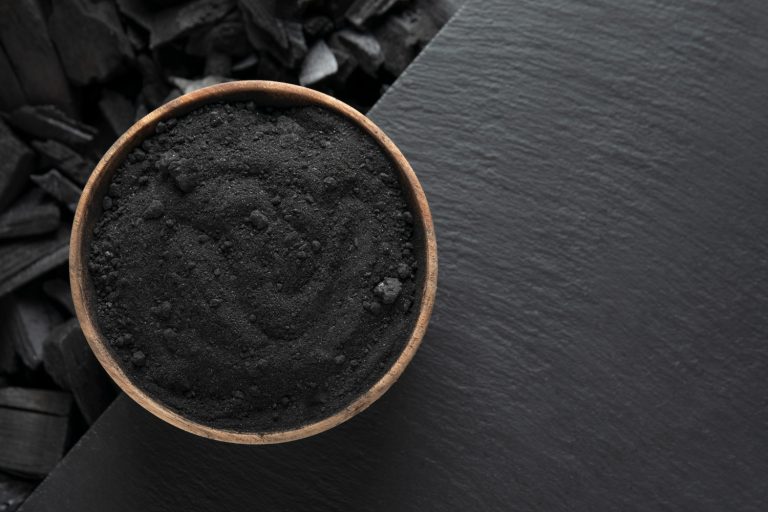
For granular products, the activated carbon is crushed and screened through precision mesh sieves to the target particle size, with strict tolerances maintained throughout.
Every production batch is tested before packaging. The five parameters tested — and the ASTM standards applied — are:
| Test Parameter | Specification | Standard | Frequency |
|---|---|---|---|
| Particle Size | ≤2mm (granulated) | ASTM D2862 | Every batch |
| Iodine Number | 800–1,400 mg/g | ASTM D4607 | Every batch |
| Ash Content | ≤2–8% | ASTM D2866 | Every batch |
| Moisture Content | ≤1–5% | ASTM D2867 | Every batch |
| Bulk Density | 400–600 g/L | ASTM D2854 | Every batch |
We review the certificate of analysis for every batch before confirming shipment. If a batch falls outside the agreed specification, it does not ship.
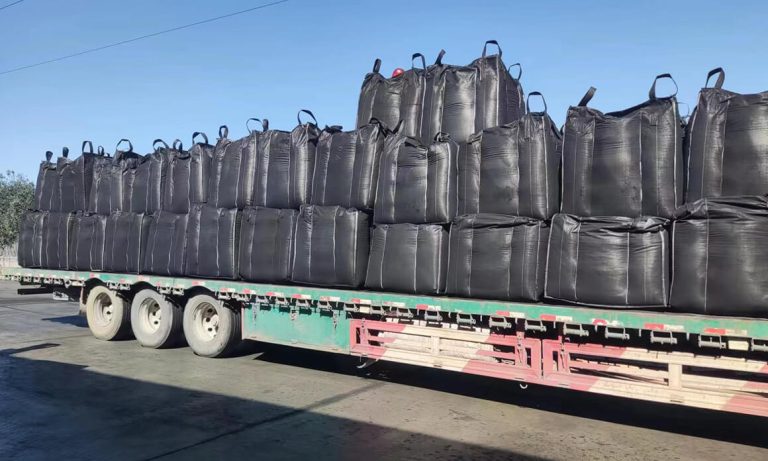
Products are packed in moisture-resistant polyethylene-lined bags (25 kg standard) or bulk super sacks (500 kg), depending on your order volume. Kalikha ships directly to your domestic or international destination with all required export documentation — commercial invoice, packing list, bill of lading, certificate of analysis, and SDS/MSDS — prepared and included.
Standard lead time is 45 days from receipt of order. Rush or custom grade requirements may vary.